My Chinese is terrible. I’m not saying that in a self-deprecating way. I mean 2 out of 3 cab drivers couldn’t understand me when I said ‘airport’ in Chinese. And airport is a simple 3 character word and well within my vocabulary. It’s also very common to use in a cab. Still, I had to resort to using an app to write it and show them the characters twice.
I live in China and can’t communicate with anyone in any meaningful way, but I have few issues living life normally. Why?
Because the few words and phrases I know, I put to very good use. And they’re very common, useful things to say.
Here’s the only Chinese you really need to know to get around in China.
A Brief Word about the Language
But, before I get into the words to know, I wanted to explain a little bit about the language. I love languages and think learning a little bit about their structure and grammar is interesting and helpful. But, if you don’t agree, feel free to skip this part. It shouldn’t affect your understanding of the words and phrases below.
I’m sure most people have seen Chinese characters before, whether it’s on a t-shirt or as part of a text. But what do they actually mean and how do you read them?
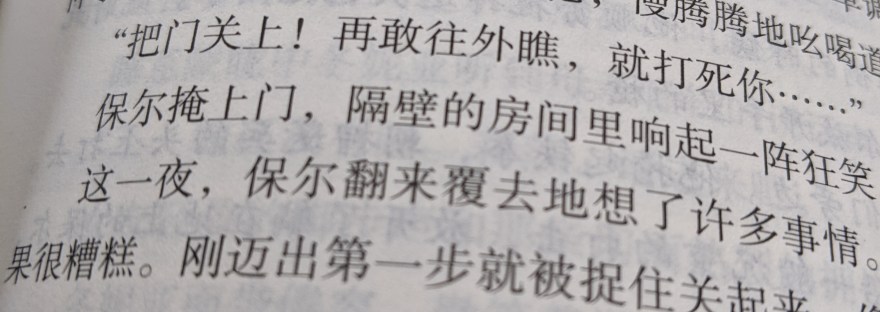
Do you know what 我要咖喱鸡肉饭。means? It was my dinner order the other night. But unless you already know the characters, you can’t read or say them. I also know that sentence more by rote than as actual words in a sentence. And I definitely can not write any of it from memory.
To make reading and learning to read easier, China developed a way to write the characters out using a version of the alphabet with several modifications. It’s called pinyin.
Chinese is considered a tonal language, meaning that depending on how you say a sound, you could say different words. One of the important parts of pinyin is marking the tone of the words.
Mandarin has 4 tones – rising (like a question), falling (like the end of a sentence, flat (more neutral or like singing a single note), and falling then rising. In order, the tones are written á, à, ā, ǎ.
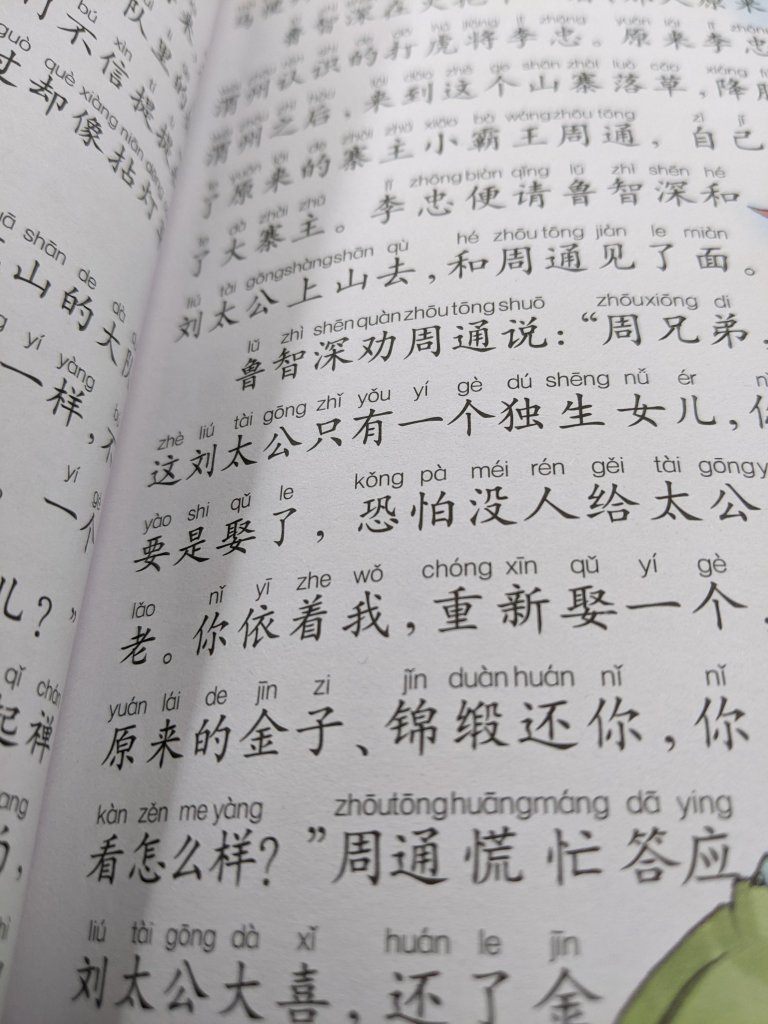
I can’t hear the differences in the tones and can’t say them correctly as they are also likely to change depending on other neighboring words.
Chinese uses a similar word order to English – subject, verb, object, with adjectives before the nouns. There are also a few differences, but they aren’t really all that important for the bits below.
Questions are a bit different. Chinese uses the same order for questions as they do as sentences. You just replace the bit of the sentence you don’t know with a question word.
Useful Words and Phrases
Here are some useful words and phrases to make your next trip somewhere Mandarin Chinese speaking easier.
这个 (pinyin: zhè ge, pronunciation: jeh gah), This
This is one of the most useful phrases or, really, words. I use it almost every time I have to say or do something in Chinese. Mostly when I have to point to something on my phone or on a menu.
There are a lot of menus that are in both English and Chinese, however, not every server is all that good at both. So, pointing at the menu and saying ‘this’ in Chinese is usually enough to get whatever food I want.
那个 (nà ge, nah ge), that
I don’t use this one as much since I don’t often have to point at anything that I don’t or can’t touch, but it is also something good to know, just in case.
请问 (qìng wèn, ching when), excuse me
This ‘excuse me’ is used to get someone’s attention and is usually followed up by asking a question. (See below for some questions you could ask.)
It is not used to mean ‘you are in my way, please move’. As far as I can tell, China doesn’t have a phrase for this, people just shove through. Yes, it does take a bit of getting used to.
我要 (wǒ yào, woah yaoh), I want
This one is good to use with 这个 (this) to say ‘I want this’, especially in restaurants and while shopping. It’s a little bit nicer to say and more of a sentence. Although just saying ‘this’ works fine in most instances.
‘I want’ is also useful for when someone offers you something, like a street vendor. Granted, you’re probably more likely to say the next one than to say you do actually want something a random person is selling.
不要 (bù yào, boo yaoh), don’t want
This is probably the most important thing to learn. It is very important and useful. It gets the annoying street vendors to go away.
If you’re only going to learn or remember one thing from this list, make it this one.
没有 (mèi yǒu, may yoh), don’t have
I use this one a lot when asked to produce documents or specific forms of payment.
It’s great while traveling but I have found little use for it around a city.
Numbers
一 (yī, ee, 1),二 (èr, are, 2),三 (sān, san, 3), 四 (sì, sih, 4),五 (wǔ, wooh, 5),六 (lìu, li-oo, 6),七 (qī, chee, 7),八 (bā, bah, 8), 九 (jìu, jee-ew, 9), 十 (shí, shee, 10)
I’m sure you can figure out many uses for numbers – shopping, prices, hotel rooms, train numbers, flight numbers, times, etc.
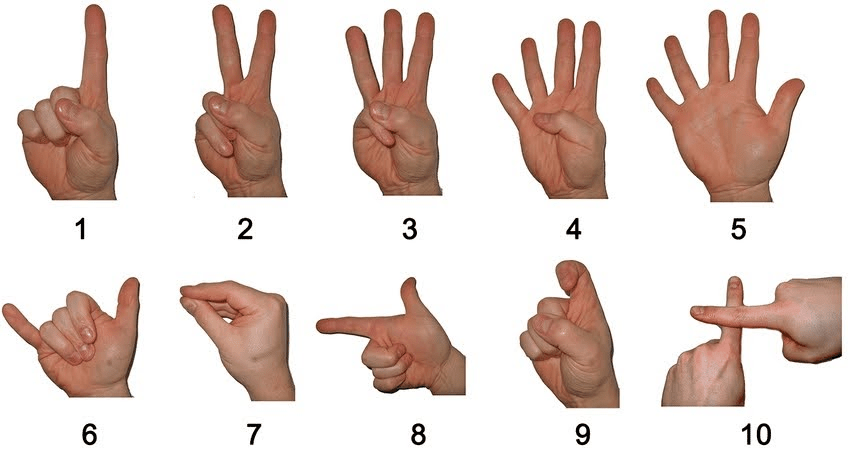
You can also count to 10 using one hand. Most Chinese people don’t really understand that this is not used anywhere else (that I know of). They will say and show a number on their hand and assume that you’ll understand one of them.
多少钱? (Duō shǎo qián, doh shaow chee-en), How much is it?
If you’ve found something in a shop that you like this is a good thing to say to help figure out a price.
Just note that haggling is normal and accepted in China, just not in larger stores. Often shopkeepers, will pull out a calculator to tell you the price as they just assume foreigners can’t speak Chinese.
You can enter a different price into their calculator to haggle or you can say “很贵” (hěn guì, hen gwei) which means ‘expensive’ and they usually lower the price.
在哪儿? (Zaì nàr, zeye nar) where?
This one is more useful with props, like a map or picture of somewhere you want to go.
If you’re lost and need to know where you are on a map, you can add 我 (wǒ, woah) before ‘where’ and point to the map.
If you’re looking for somewhere and you have a picture of it, you can use ‘this’ before ‘where’. Or, if you have the Chinese name, you can also say that first.
谢谢 (xiè xiè, shay shay), thank you
I’m sure you can figure out when and how to use ‘thank you’.
Useful Sentences
Here are 3 sentences that I have found invaluable. And I’m sure you’ll wind up saying them a few times, too.
我不会说中文。(wǒ bù huì shōu zhōng wèn, woah boo hwei show jong when) I can’t speak Chinese.
你会说英文吗(nǐ huì shōu yīng wèn ma, knee hwei show ying when ma) Do you speak English?
我不听懂 。(wǒ bù tīng dǒng, woah boo ting dong) I don’t understand.
Good luck with your adventures!


 My TEFL Adventure
There is something entrancing about listening to other languages. I don’t think I could ever manage Chinese but there are useful sentences. The counting of numbers using one hand is very interesting. I had no awareness of that. Fascinating.
LikeLiked by 1 person
It always confuses the students when I tell them I don’t know what number they’re gesturing. It has never occurred to them that China is the only country that uses it. Some of the faces they make are very entertaining!
LikeLike
😆😃
LikeLiked by 1 person