
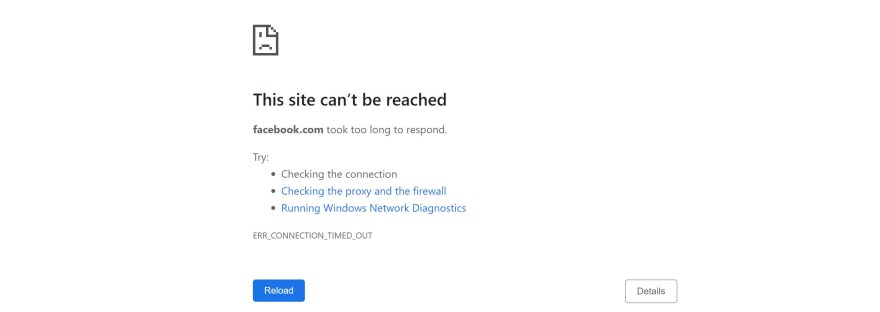
You’ve probably heard of the Great Firewall of China, and, if you’ve followed me for a while, you may have heard me talking about it, like in this post, where I talk about some app I’ve found useful while living here.
If you haven’t heard of the Great Firewall, it’s what the Chinese government uses to ensure that outside influences aren’t “corrupting” the impressionable minds of the Chinese people. Basically, it’s what enables the government to block any website that the government considers to be against the moral and ethical wellbeing of the citizens (read: cause them to discover something that may not paint the Chinese government in an angelic light, or goes against their prejudices), is against the interests or laws of China (usually relating to the One China policy or to protect their local dominance), competes with a Chinese company (like Google), or is just something the government can’t control and allows the free exchange of ideas (like social media).
It sounds terrible. But what is life really like on this side of the internet censorship?
That’s Average
Imagine living in a world where you can’t use Google, Gmail, Facebook, Twitter, Reddit, or Instagram. How would that affect you every day? Just think about how many times you check your social media or do a quick Google search for something every single day.
I’ll wait while you contemplate your usage.
I bet it’s a lot. I spent over 2 hours on social media a day. And Google has nearly 6 billion searches a day, worldwide.
The average person spends over 2 hours on social media a day. And Google has nearly 6 billion searches a day, worldwide. I have no idea what that means for the average person, but that’s nearly one search a day for every single person on the planet, many of whom don’t have access to electricity or the internet.
I know I do my part to contribute to these numbers. I was on my socials for close to 2 hours a day (a little can add up quickly!) and searched probably somewhere around 5 to 10 times a day.
Were your numbers higher or lower?
That’s Blocked
But, in China, that’s all blocked. You can’t go on Twitter, Facebook, Instagram, or any of the others. And you can’t use Google to search. You have to use Bing.
I didn’t really appreciate how nice it is to search for something and have the answer always be right at the top, often in a little box. Those statistics above were from a little box right at the top of a Google search. It took longer for me to write the sentences than to find the information!
Now, I’m lucky to get an answer to any question I ask Bing after looking at a couple pages and trying different search terms. And the content at the top, sometimes just isn’t useful.
For example, I once needed a few sound files to play in class, just a bit of piano playing, a trumpet, and a baby crying. Basic files that should be easy to find. I only had a few minutes before I needed to demo the lesson. I quickly searched Bing, but everything was either in Chinese or didn’t have downloadable files. I had just grabbed my phone to search Google it with my VPN. The first result was exactly what I needed. It was a site that had tens of thousands of sound effects files.
On addition, the website I eventually found the music files I needed on, I tried to access it on my VPN-less work computer. It was banned.
In the end, which would you prefer to live with – 30 seconds on Google or couldn’t find anything usable? I’m pretty sure it’s not the one I’m living with everyday.
Social Media, If You Could Call It That
Outside the Firewall, you can use whatever app or website you want to make your thoughts public. And, for the most part, you can say whatever pops into your head, provided it doesn’t go against the rules of the service. If you don’t like one, you can try another, if none of them suit you, you can start your own, if you have the money and know-how.
Inside the Firewall, your options are very limited and heavily regulated by the government. People are regularly banned, fined, or jailed because of their posts.
In the 6 months I’ve been living in China, I’ve lost count of how many articles I’ve seen about someone being banned from one of the Chinese social media sites for criticizing the government or an official, complaining about some policy decision, for presenting an image of something that is considered “immoral”, “unethical”, or is too popular, in the case of Jack Ma and other tech giants.
Popular Chinese blogger Feng Xiaoyi had his account suspended by Douyin – China’s version of TikTok – last week for “promoting unhealthy values”, after some users complained about his “sissy” videos.
ExpatHub
China has recently started another round of banning anything that could be pro-LGBT+, and using “sissy” to discriminate against anyone that seems homosexual, flamboyant, or just not “manly” enough.
And my favorite story of someone getting banned, mostly because it makes absolutely no sense:
A man who got popular after posting a video online a month ago in which he described himself as a “high-quality male” has been silenced by China’s social media Sina Weibo. The man was banned after he was reported to have charged 25,000 yuan ($3,857) per month for people who wanted to join his fans group.
PandaGuides
Over the past month since July 21 Xu Genqin, a 29-year-old man, who posted a self-introductory video in a bid to find a mate on China’s social media Weibo, successfully impressed viewers by his makeup, hair style, and half-squat poses, and was imitated by many celebrities and influencers
I’m still really confused about how people could think that visibly half-squatting, basically just crouching a bit, could be an attractive pose. If you have a mirror handy, try it out for yourself. You’re just making yourself shorter, for no reason.
And I have no idea why he was banned. The article made it sound like it was for charging his fans, but, I know a lot of people with an internet following that charge for additional content. I’ve heard numerous people I follow online plug their Patreon accounts as a way to donate and get extra content.
What the Locals Think
I know many Chinese who have and use a VPN often, who know there is more out there than they can officially access. I also know and have heard stories about Chinese who drink the Kool aid, for lack of a better term, who believe whatever the government tells them and don’t question the official story.
From what I understand, the locals just consider it a normal part of life. They have their grievances about what they can find and have access to online, but, if they want or need to, they can get around it as well.
I don’t think the government will ever get rid of it. It gives them too much power and control over the population. Something, I don’t think they could rule without, at least not long term.
If you have any questions about any of the terms I’ve used, look in the glossary.


 My TEFL Adventure
I was only just recently thinking about how we dont have to remember many facts these days. We can just search on Google and finds it in our hand, pocket or bag.
But not in China it seems.
Bing leaves a lot to be desired.
LikeLike
It is definitely different over here and takes some getting used to. Especially, Bing letting me down every day and having to keep going back for more.
But, I have a VPN on my phone allowing me to happily keep Googling, if in a more limited capacity than I would like.
LikeLiked by 1 person
Thank goodness for VPN’s !
LikeLiked by 1 person
Yep! Couldn’t live without one anymore.
LikeLiked by 1 person