Summer in China is when most people travel. It’s a time of relaxation and vacations. People are traveling all over the country, many to see family and others to see something new. However, this summer, in the middle of the travel season, Covid reminded us that it still exists.
The Nanjing outbreak was the biggest Covid outbreak since the first one that got the world sick. Nanjing is a major city and former capital in China and just inland of Shanghai. It is also one of the few cities that still has international flights during the pandemic.
Origin
On July 21st, it was announced that 17 people that worked in the Nanjing airport, mostly airplane cleaners, tested positive for COVID-19. In China, 17 people is usually the national total of weekly imported cases as there is little to no community spread in the country.
The airport only tested workers weekly. So, many of them were infected and went about their lives, spreading it around their communities, the airport, and the country.
Once their infections became public, several communities (apartment complexes) were declared medium risk and put in lockdown and the contact tracers got to work identifying and testing close and semi-close contacts and their contacts. The city also announced that, to leave, you need a negative test within 48 hours.
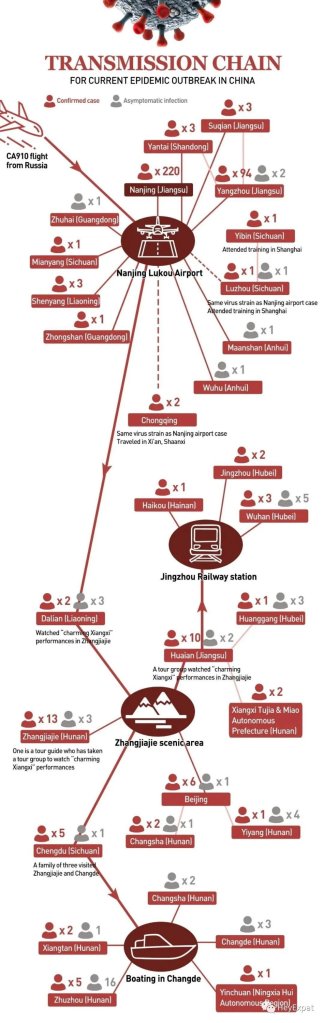
But, it didn’t matter. The virus still spread. For a week, half of the news I was seeing every day was about the number of cases and where the virus had spread. It was quickly in 18 provinces, about half of those in China, and over 30 cities.
Summer Travel Season
The spread was helped along by the summer travel season. Zhangjiajie, Chengde, and Chongqing are major tourist attractions for Chinese travelers. Zhangjiajie, where I took a short week-long trip, even has signs encouraging the elimination of poverty through tourism.
The people that visited Zhangjiajie were there the week before me, but they weren’t identified as potential carriers until they tested positive the next week, when I was there. And then their recent travels were scrutinized and contacts identified.
But, the real issue was that they went to one of the outdoor shows, along with 2,000 of their closest friends and a local tour guide. Most of the cases that spread in Zhangjiajie can be traced to this show.
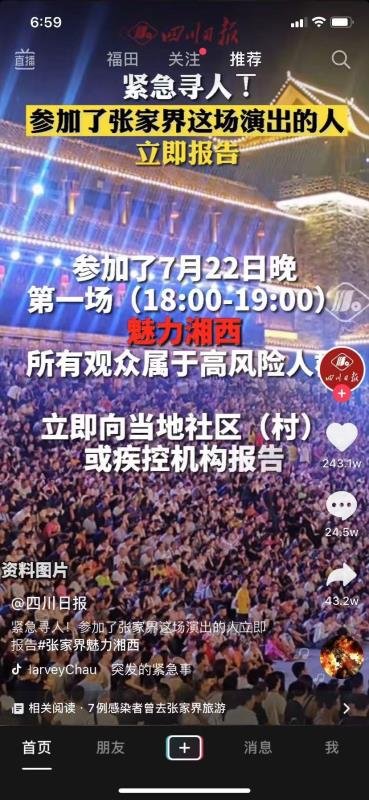
While I was there, no one asked me to take a test. I did meet a couple foreigners who flew in while I was there and got a visit from a Covid tester in their hotel room, but weren’t asked to stay in while waiting for the results. I was lucky enough that I was considered not at risk while I was there and was allowed to travel as I wished. Shortly after the news of the show and after I’d left, Zhangjiajie went into lockdown.
Control
By the end of the outbreak, nearly 50 cities in 18 provinces had well over 1,000 cases, 20 high risk areas, and over 200 medium risk areas. In just Zhengzhou, nearly 16,000 people were sent to quarantine when the city had just over 100 cases. Over 4,000 people in Zhangjiajie went into centralized quarantine. I wouldn’t be surprised, if over 100,000 people in China were forced into quarantine over their travel or contacts during the outbreak.
To try to stop the spread, or at least identify people that may be infected, China relied heavily on technology, specifically the travel health code and local health codes. Green codes are good. If you have yellow or red, it’s basically a one way trip to the local hospital or quarantine.
The travel code lists where a person was for the last 14 days. If they were anywhere that is questionable, it will show on their code. There might even be an * saying that they were in a city with a medium or high risk area, even if they didn’t go to the risky area.
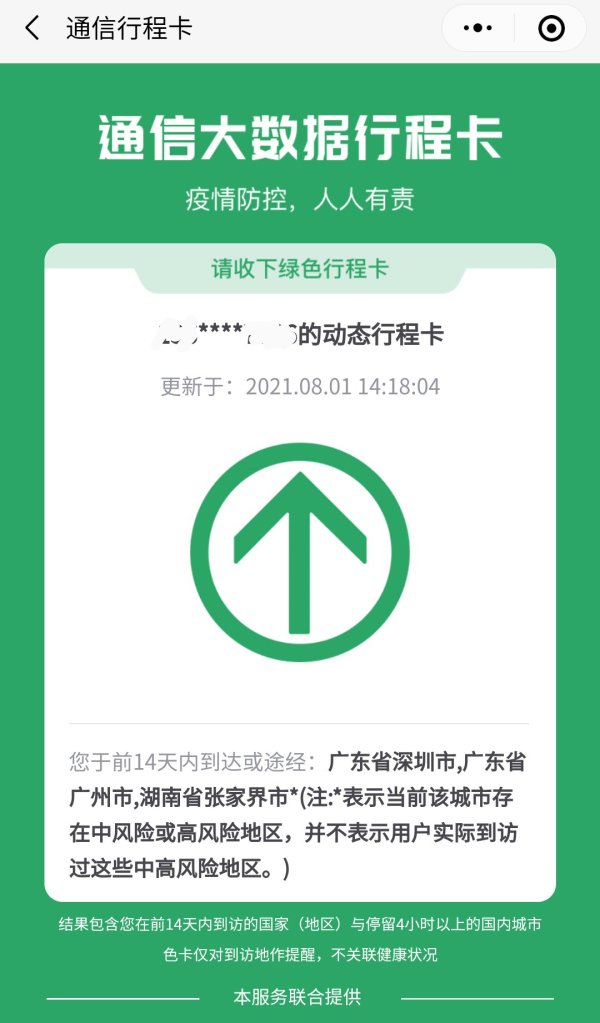
But, most official didn’t pay much attention to the color with the travel code’s color. Possibly because almost all codes stayed green, unless, I assume, there was a specific instance of “risky” behavior, like being in a medium or high risk are, or being a close contact of someone infected.
I’ve never lost my green health status, even though I was thrown into quarantine over my travel history. I know a bunch of people that were discussing the cluster of cases in Zhangjiajie and no one lost their green codes, but some were subjected to a bit of extra scrutiny and Covid tests.
However, they were obsessed with seeing the codes. Going anywhere required showing a code to at least one person, usually several, at several different check points. They were especially strict in airports and train stations.
A couple cities also imposed travel bans. Nanjing closed the airport for a few weeks. Beijing banned flights and trains from any city with a Covid case. Others started to require a negative Covid test within 48 hours before departure.
Punishment
Due to the several recent outbreaks, not just the Nanjing one, but also the two in Shenzhen and one in Guangzhou, 70 local and national officials faced some form of discipline.
Twenty officials in Guangdong, my home province, site of 3 different outbreaks, were charged with “dereliction of duty”. The other 50 officials’ punishments were related to the Nanjing outbreak.
[T]heir poor performance in the coronavirus fight, which is seen as an important part of China’s dynamic and flexible epidemic prevention and control strategy that has proven effective in the country’s fight against the virus.
ExpatHub
In Nanjing, the outbreak was blamed on several airport officials, claiming that the cleaners were improperly supervised, lacked proper equipment, and protective gear and the airport didn’t have adequate testing measures in place.
A lot of the officials were fired, especially the higher-ups that were blamed for the outbreaks. The ones that survived the purge were demoted, given official reprimands or warnings, or both.
The Nanjing outbreak also caused a lot of people to question the effectiveness of Chinese vaccines, since 90% of airport workers were fully vaccinated, and how long China can keep up their zero cases policy, while the rest of the world gets back to some form of normal with a limited number of cases.
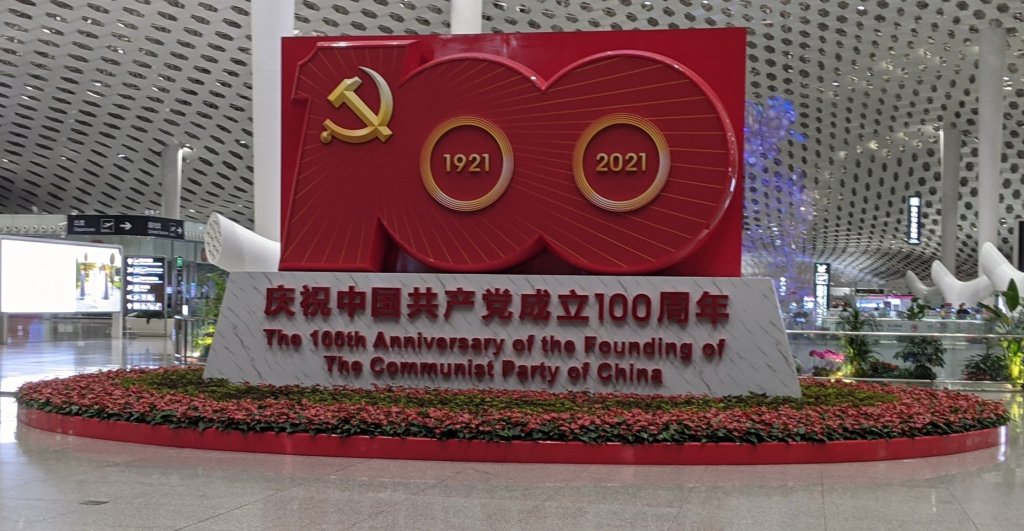
And, in China, questioning the government is something that they don’t tolerate, especially now as it’s the 100th anniversary of the founding of the Communist Party of China and everyone is supposed to be patriotic and singing the praises of the Party.
Fall Semester
Because the outbreak spread unchecked for several weeks, it effected teachers’ and students’ summer vacations. Cities announced various requirements that teachers, students, and staff would have to meet before they would be allowed into their school.
Most cities are happy with a negative test. Some said that schools could delay their fall semester if they needed to because of the pandemic.
Beijing has a whole list of requirements. People in medium and high risk areas are required to stay there until the area is declared low risk again (usually around two weeks after the last case was discovered), then, once they get back to Beijing, they have 14 days of “health monitoring” and up to 3 Covid tests, before finally being allowed to go to work.
Others, including Shenzhen, have just said “Don’t leave the province.”
If you have any questions about any of the terms I’ve used, look in the glossary.


 My TEFL Adventure