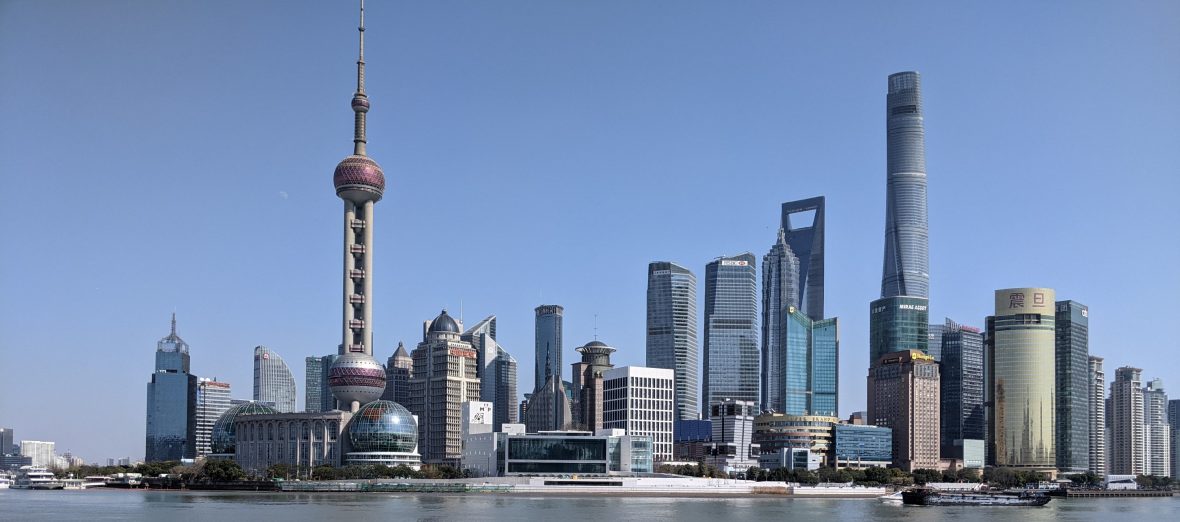
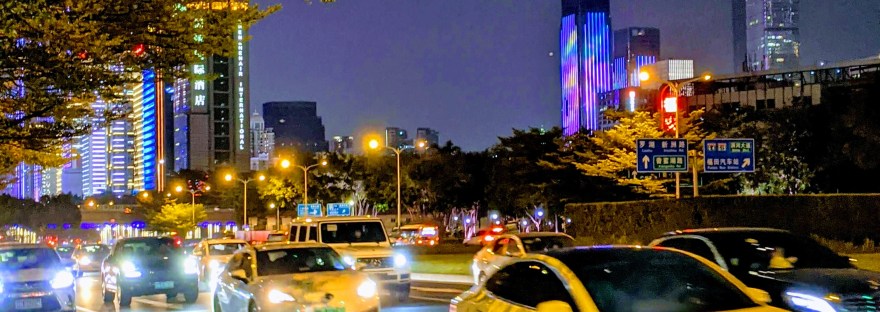
Getting around in a foreign country can be challenging. It’s worse when you don’t speak the language. It can be downright impossible if their writing is something you can’t read.
China has a lot of ways for getting from one place to another, if you can figure out how it works. Luckily for English speakers, China realized that almost no one outside the country can read or speak the local language. Therefore, almost every sign and major announcement on public transportation is in Chinese and English.
Plane
Airplanes are the only efficient way of traveling long distances. If you plan on visiting China you will almost certainly have to visit one of the many airports in the country.
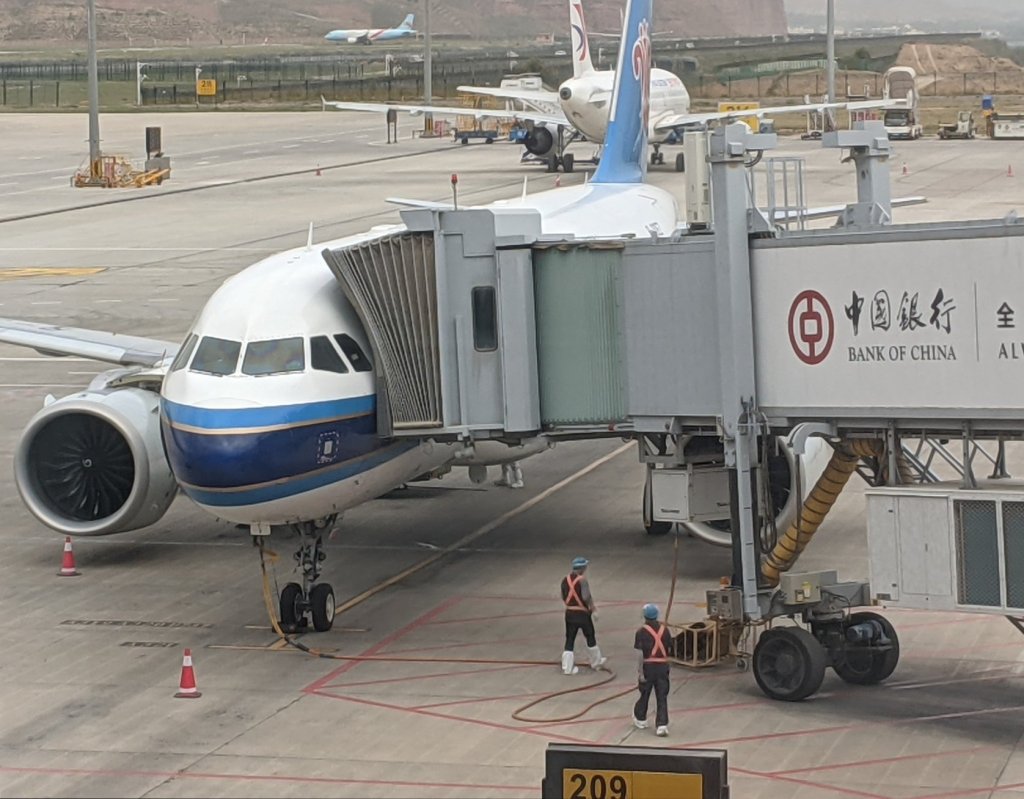
The one difference between flying in China and flying in the rest of the world is that there is a safety officer onboard every plane, very useful for when that inevitable fight breaks out.
Also, you’ll want to bring all of your own entertainment. At best, the plane will have a flip down TV and some USB ports, if you’re lucky. Usually, there’s not.
But, they have food. Not good food, but something that they say is edible. I was once served a “chicken hamburger” that was an over-heated large roll with a slice of deli chicken and 3 small slices of zucchini (or cucumber or something else that looks like that). It was frightening. Don’t worry though, not all of it is that bad.
Airports
For the most part, an airport is an airport – arrivals, departures, security, baggage claim, restaurants. Where China’s airports are different than other airports around the world, at least those that I’ve seen, is that they could double as shopping malls.
There are a ridiculous number of stores and shopping opportunities. I’ve seen fancy clothes stores, electronics vending machines, and luggage stores, in addition to the standard restaurants, snack shops, and bookstores.
And, the majority of the shopping is before the gates. Remember to wear your walking shoes!
Also, normally I’ve seen each airline have their own check-in counters, to get a ticket you have to remember which airline you’re flying and find them in the airport. In China, especially in smaller airports, there is just the check-in counters. You can go to any one and get your ticket.
Luggage
Luggage rules are also different, both checked and carry-on. In contrast to the rest of the world, Chinese airlines have kept the free checked bag. Technically, you can check several bags for free, as long as the total weight is not more than 20kg.
However, they only allow one small carry-on bag. Officially, carry-ons can only weigh 5kg, but no one checks as long as the bag is the right size. If you do spend some of your yuan in the airport shopping mall and wind up a second bag, I doubt there’d be too much of an issue getting it all on the plane, but don’t buy too much, just in case.
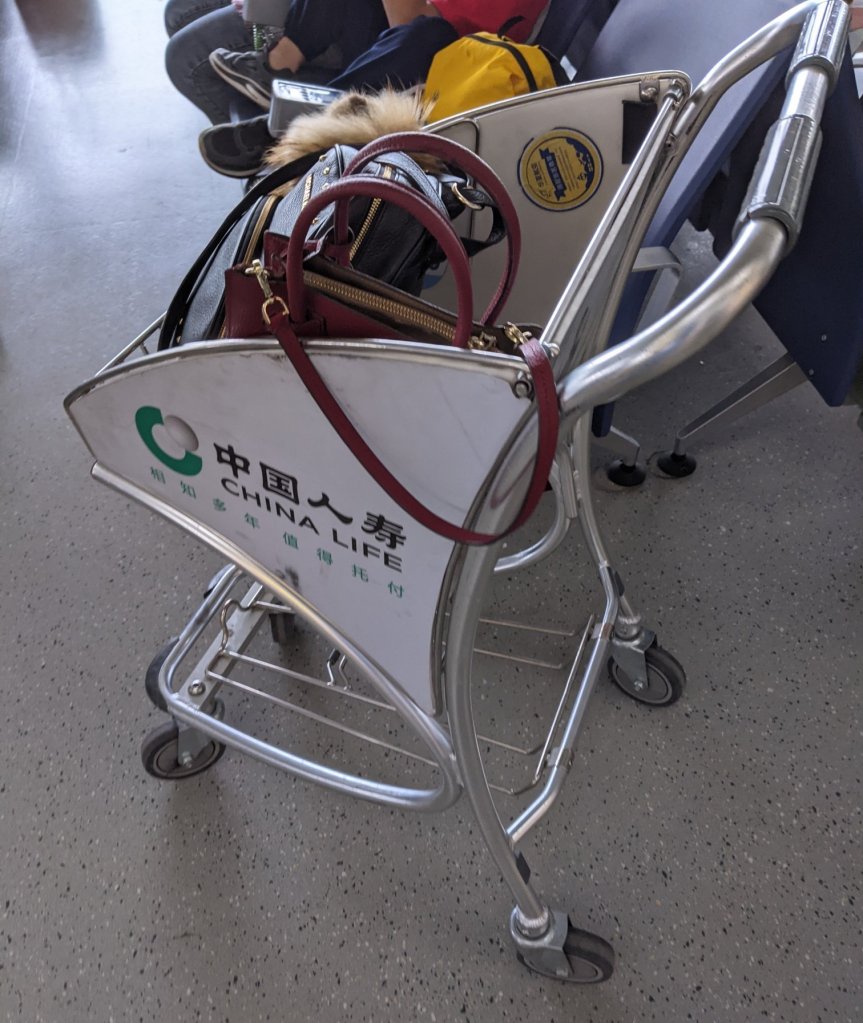
However, if you do have a lot of luggage or just don’t want to carry it anymore, grab a handy cart. They’re free and available for check-in, for you carry-ons while waiting in the terminal, and at baggage claim.
Train
Trains are a very popular way to get around in China, especially if you aren’t going that far. The train network is very extensive and connects most decently sized cities together. Taking the train can be cheaper than flying, but not always.
They have high speed trains and slower trains. There is also a mag-lev train in Shanghai that you can take to the airport. (They did just design and begin manufacturing of a new mag-lev train but there are no tracks for it, so it’s currently useless.)
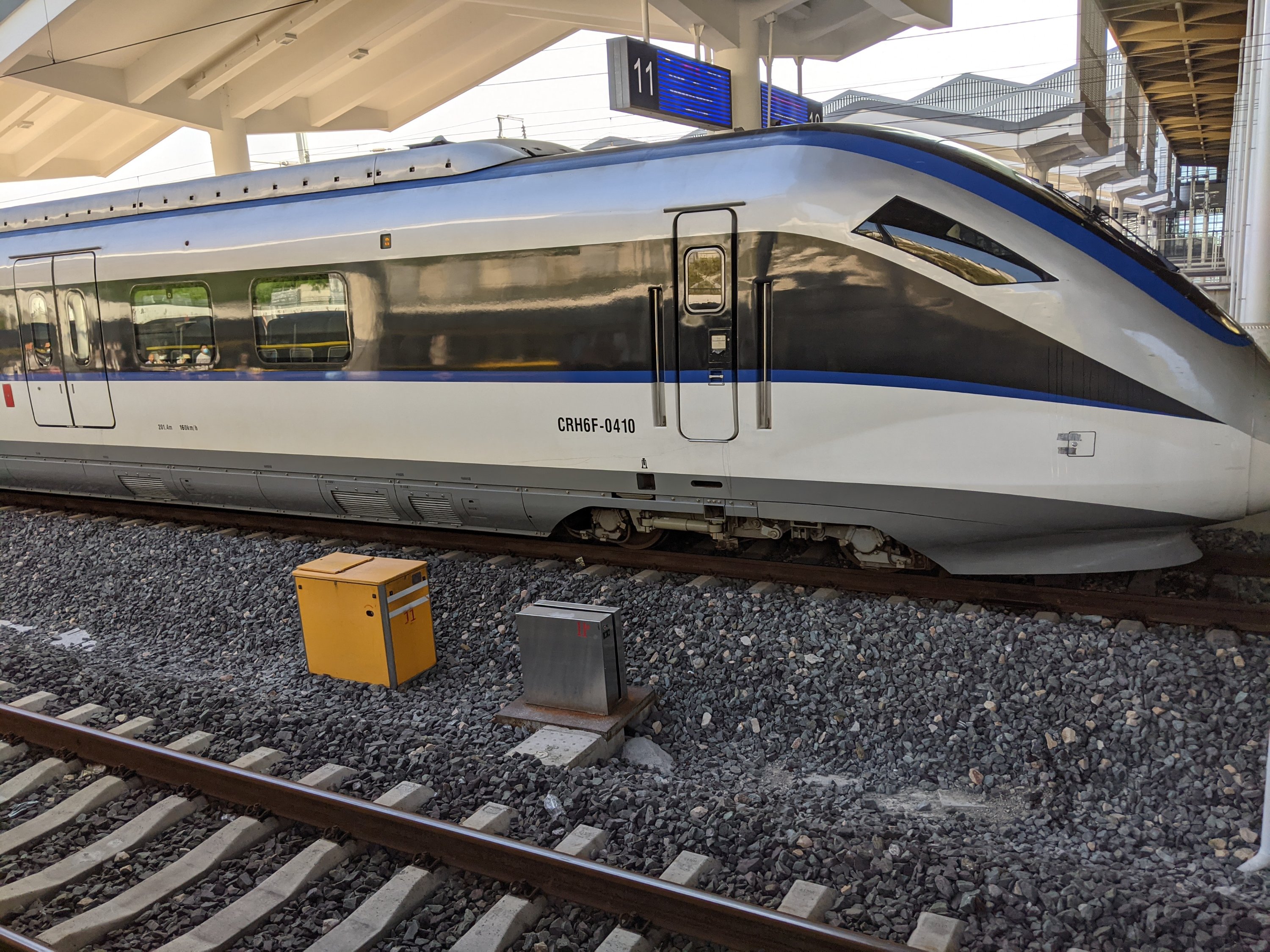
High speed 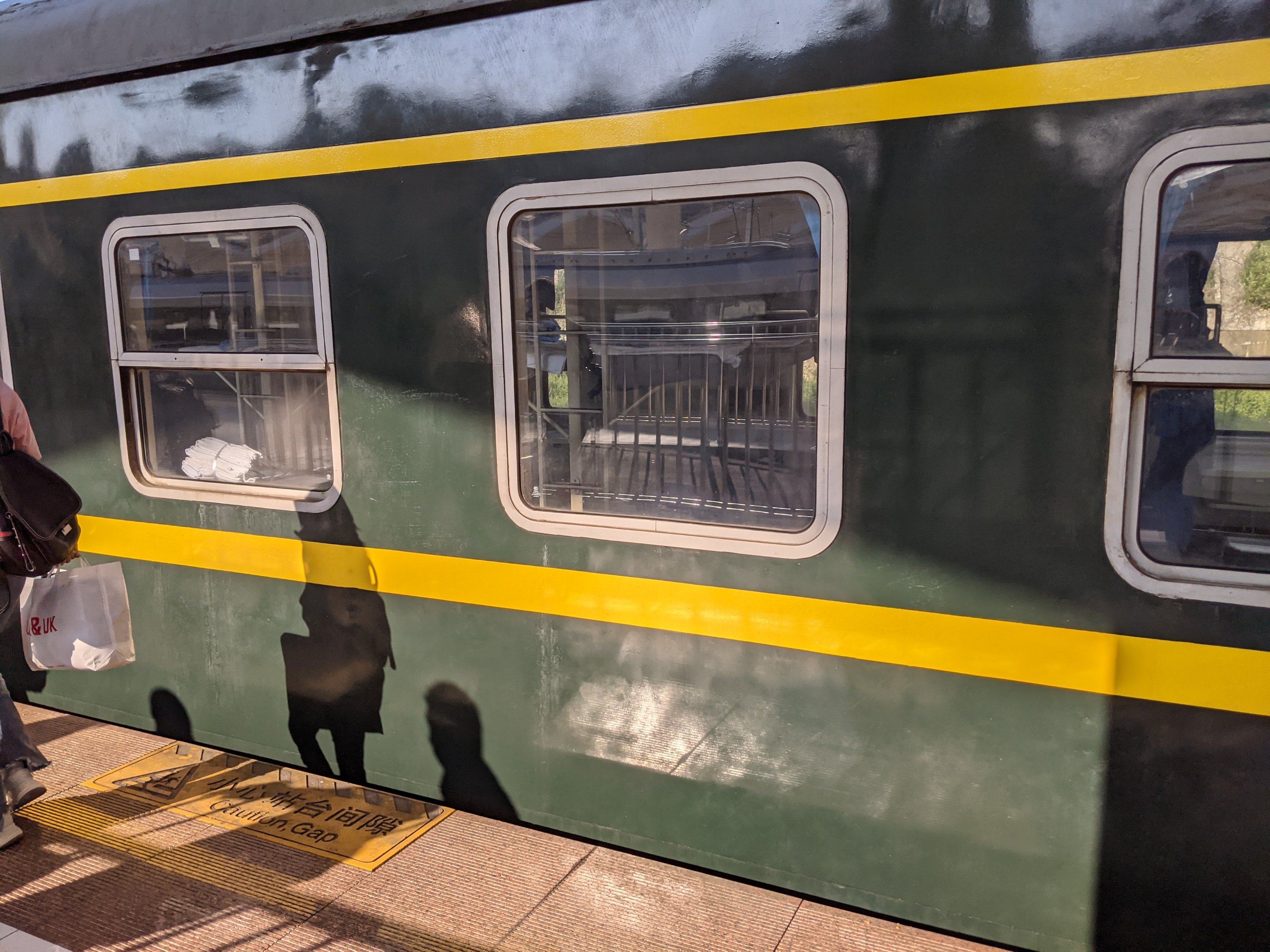
Slower/overnight
Seating
The high speed trains usually only run during the daytime, unless you are going between a couple major cities that are far apart, and then it’d probably be faster to just catch a plane. The slower trains are the overnight trains.
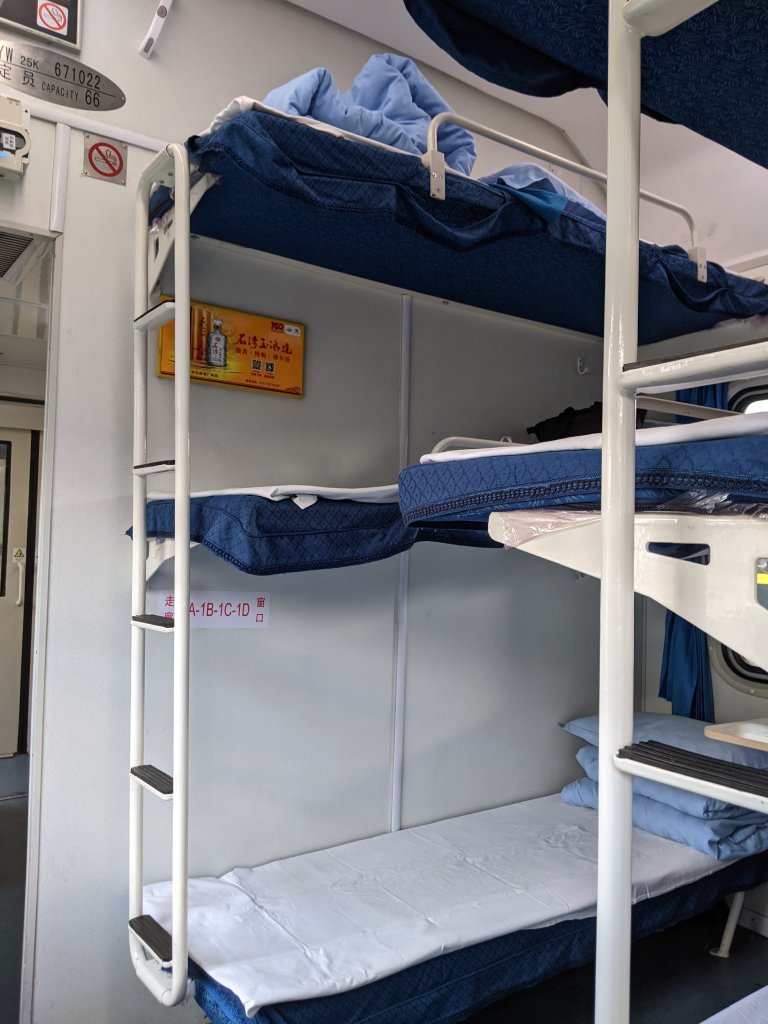
But, no matter which speed train you get, you need a place to sit, or not. There is everything from standing tickets to fancy sleeper cabins. The most common are the seats (best for short durations), and the hard and soft sleeper (best for overnights).
Seats are broken up between hard seats and soft seats. They are mostly the same, just the soft seats have a little bit more space and, therefore, more expensive, but both are comfortable.
The sleepers are bunk beds. The hard sleeper is 3 beds on each side of a “cabin” and the soft is only 2 beds on each side. The hard sleepers are more one big open dorm with a few seats on the other side of a tiny aisle. If you don’t feel like sleeping with roughly 50 strangers, the soft sleeper has a door, but now you’re in a closed room with 3 strangers, assuming you’re traveling alone.
Food
I’ve heard rumors that there are dining cars on the trains, but I’ve never wandered around trying to find one.
There are people that walk up and down the cars selling meals (I didn’t see anyone selling breakfast) and snacks and water. They take cash and WeChat Pay. Some of it might be a little more expensive than off the train, but they have a captive audience. There’s no option to run off the train and grab anything when it stops.
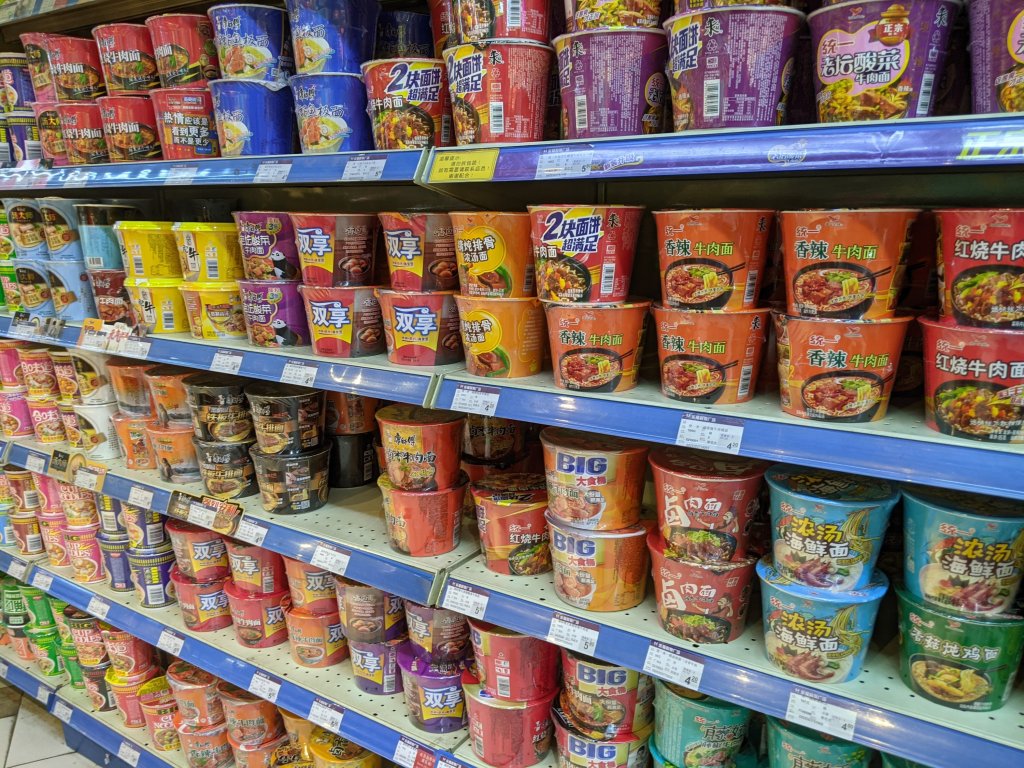
There is also a hot water tap in every car (or, at least, every car I’ve been in). It’s very popular to buy some cup ramen to eat on the train. Most families will go with an extra bag full of food and several large cups of noodles.
Taxi
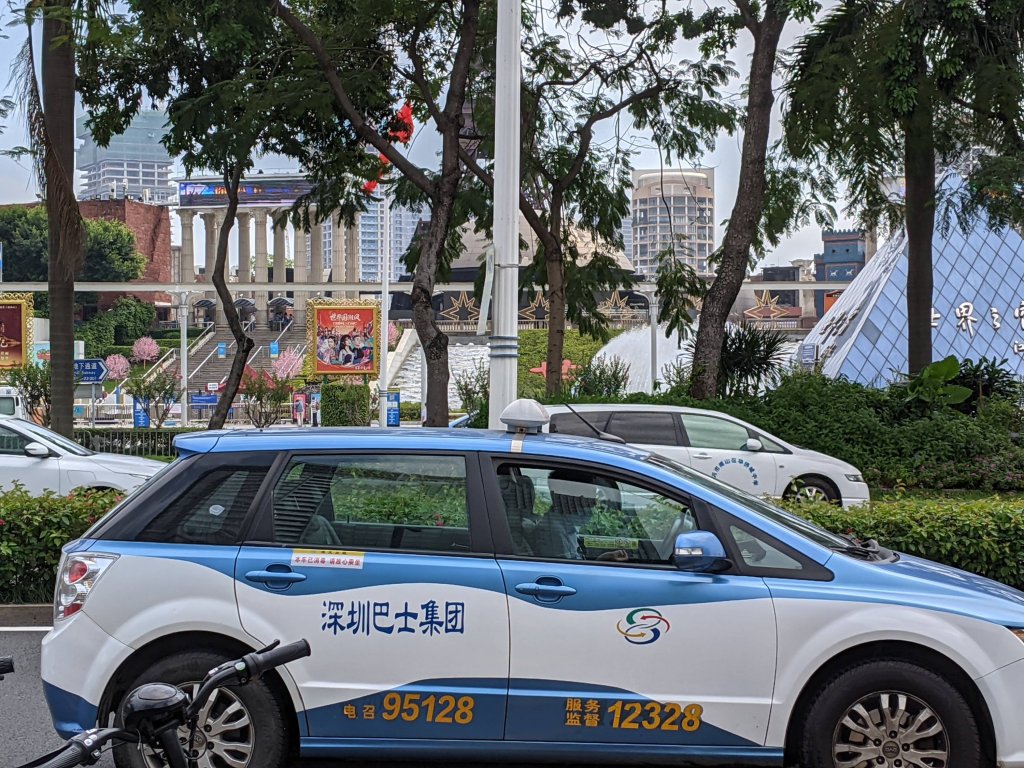
Taxis are a common way of getting from one place to another. Most taxi drivers don’t speak English, so make sure you know the Chinese for your destination, either you can say it or have it written down somewhere to show the driver.
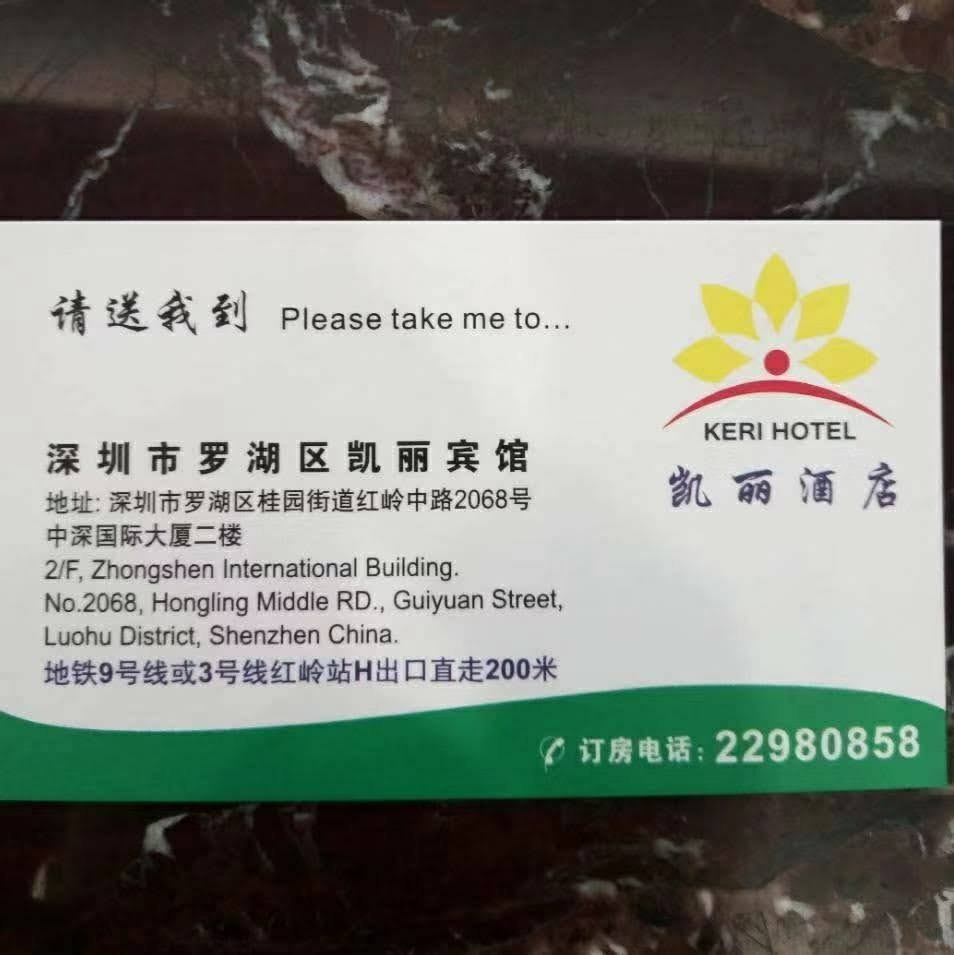
Hotels in China have business cards that have the hotel’s address in English and Chinese with the words “take me here” so that you can just give it to a taxi driver and you don’t have to understand each other. If you’re not going to your hotel, I hope you can say where you’re going in Chinese, unless it’s a major tourist attraction, then you can show a picture.
Taxis are also very cheap. When I got sick in Shanghai, I took a cab back to my hotel, a decent way across the city, and it was only 50 yuan. Getting from Shenzhen’s airport to my hotel was more, at 100 yuan. A similar trip in the US would be well over $50.
Taking a Didi, or other Uber-like services, is even cheaper.
Metro
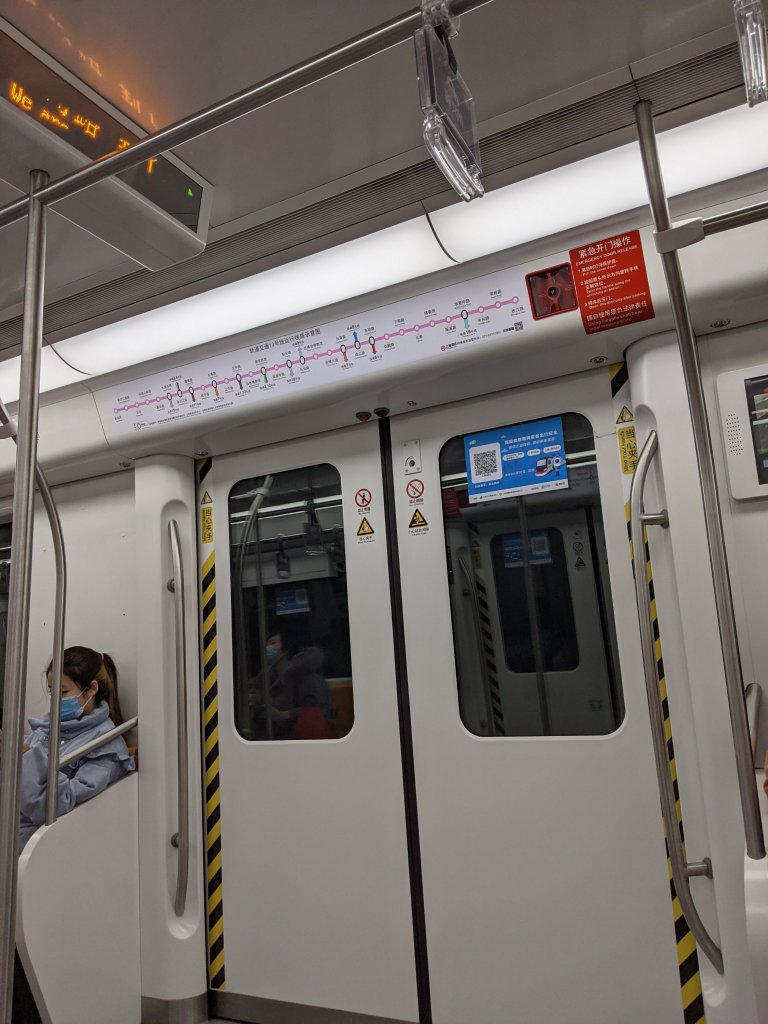
Major cities in China are growing fast, and so are their metro (or subway, depending on where you’re from) systems. Every major city has one, and, as far as I can tell, every one is expanding, as fast as they can be built.
Tier 1 cities, like Beijing, Shanghai, and Shenzhen, have massive metro systems spanning most of the city and crisscrossing the downtown areas and tourist attractions.
Other, smaller, major cities, like Harbin, have only a few lines, but are working fast to expand to meet their population and tourist needs.
And, like other subway systems in the world, each city designs, administers, and runs their own systems. Therefore, buying a ticket will be different in every city.
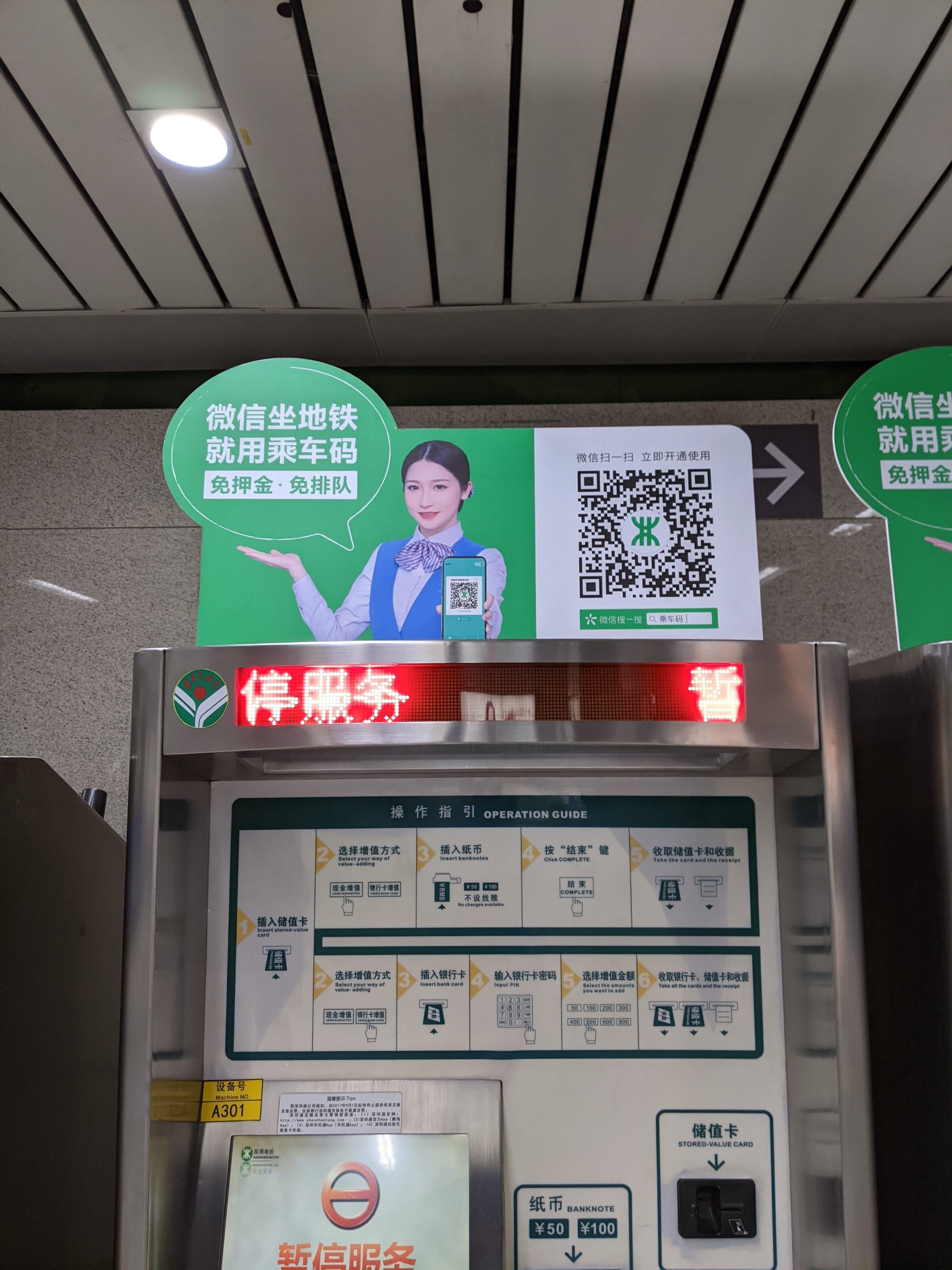
In Shenzhen, you have to buy a plastic card from a machine that only seeks Chinese and probably won’t take cash (it can but a lot of the machines won’t accept bills, I think it’s due to the pandemic) or use a WeChat mini program (and WeChat Pay). But, if you can get your hands on a card, you can go up to the customer service person and give them cash to put on your card.
However, in Shanghai, it’s very easy to get a card from an English speaking machine for each trip using cash. While it is very foreigner friendly for getting on, some transfers require that the travelers leave the station, where the turnstile will eat the card, and walk a ways in the building to go in a different gate to get to the new line. Luckily, there are other stations to use to transfer to get to your destination.
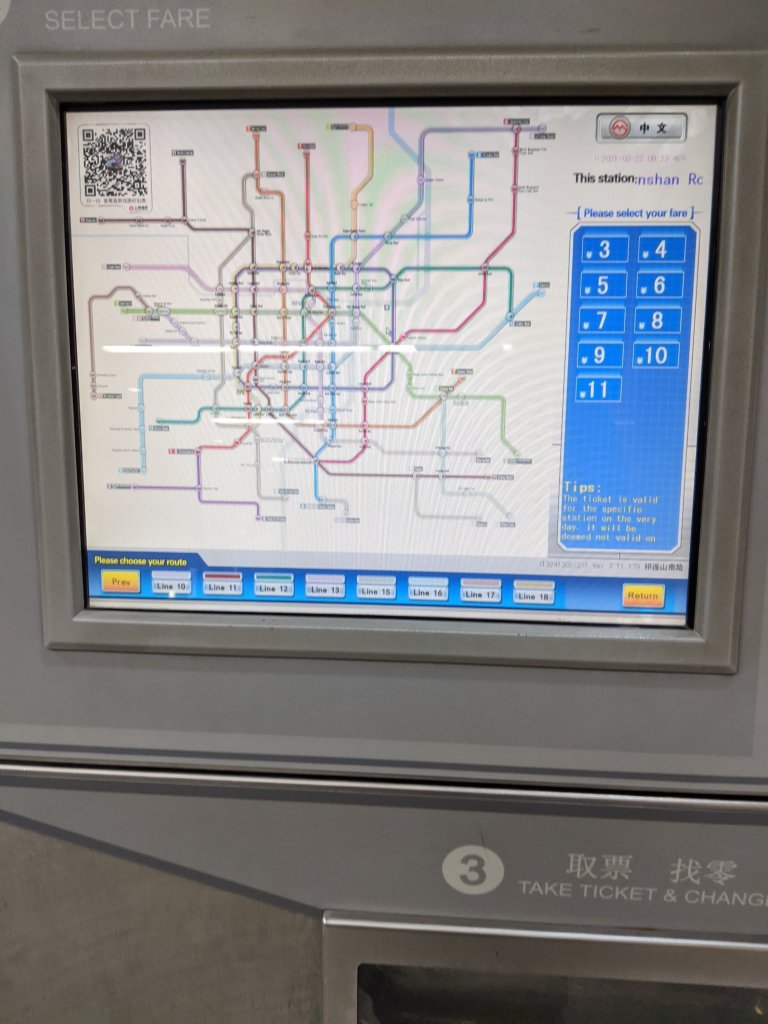
One thing all the metros seem to have in common is that they’re dirt cheap. I’ve yet to pay more than 7 yuan for a trip. I doubt it’s even possible to pay more than 10 in any city, even to go from one side of it to the other. I couldn’t imagine going one stop in any American city for less than $2 US, let alone across the city.
Share bikes
Renting a bike has become a popular thing in most major cities worldwide. China is no stranger to the shared bikes. In Shenzhen, these yellow bikes are the most common.
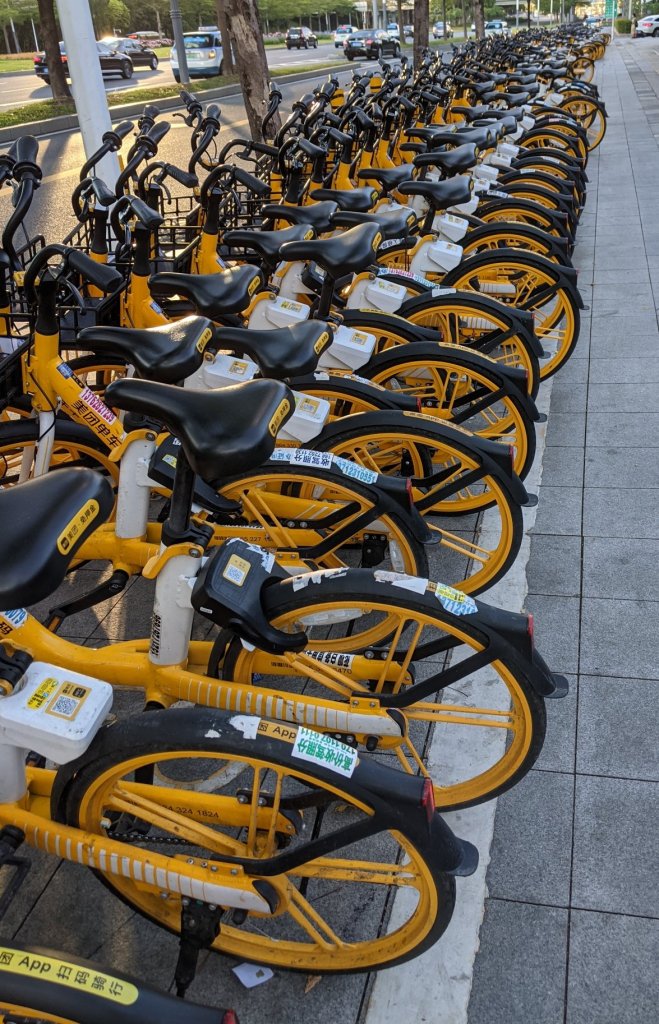
To rent one, you need to scan the QR code under the seat. However, you will need to have WeChat Pay or Alipay working and you may need to set up the Mei Tuan (美团) app for these yellow ones. Although, many bikes can just be scanned in WeChat to rent.
They only cost about 1 yuan for 30 minutes.
If you have any questions about any of the terms I’ve used, look in the glossary.


 My TEFL Adventure